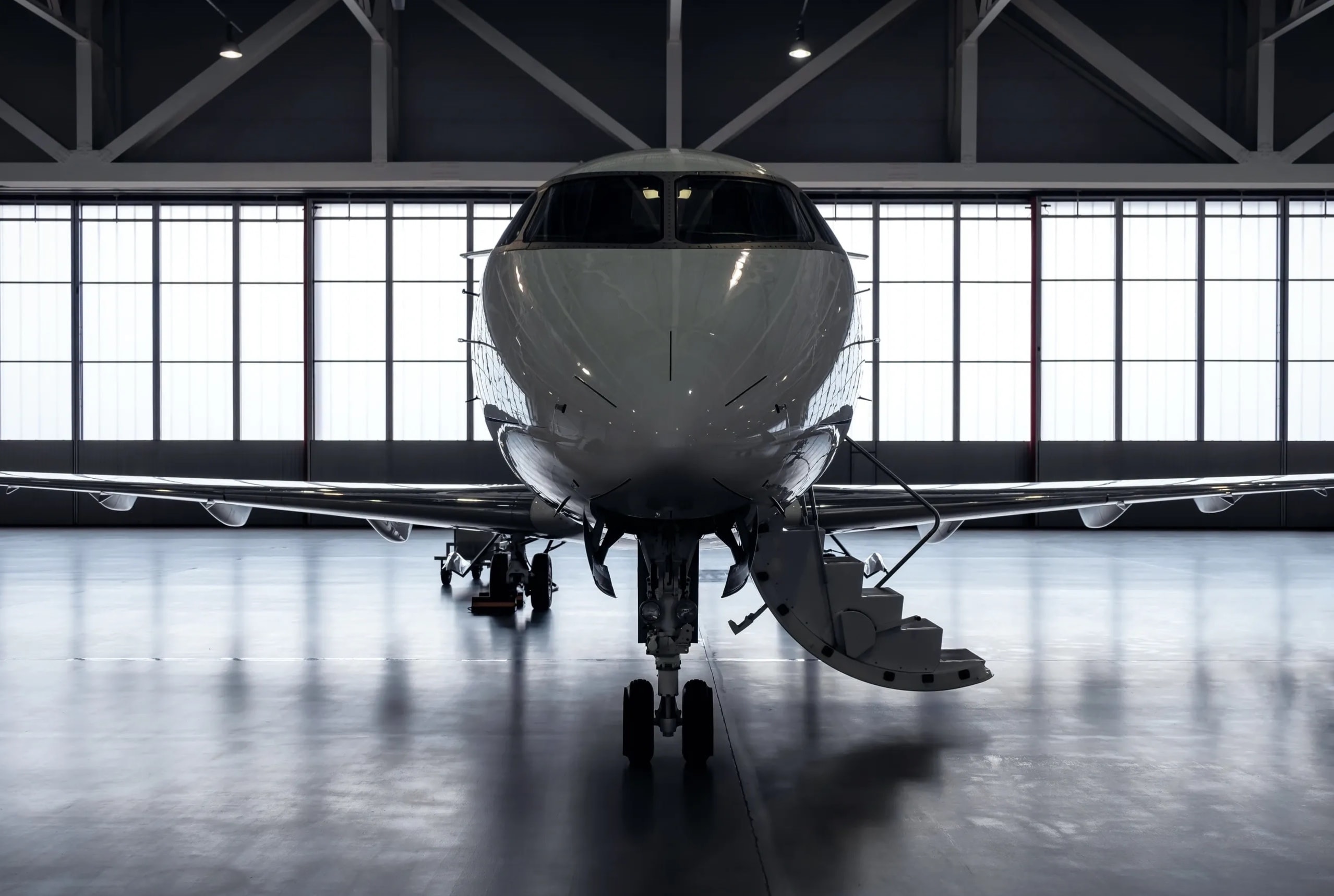
Owning a private jet can require an annual operating budget ranging from the high six figures for some lighter aircraft to more than $2 million for a large-cabin or long-range jet. That estimate can rise substantially with heavy utilization, an older airframe, major inspections, engine work, premium crew requirements, or extensive international operations. It does not include the purchase price, financing, depreciation, taxes, or major upgrades unless those items are added separately.
There is no single reliable average. Two owners with the same aircraft model may have different costs because they fly different hours, base the aircraft in different markets, use different maintenance programs, and face different insurance, staffing, and trip requirements. A useful budget therefore begins with the buyer's actual mission and a specific aircraft, not a generic hourly figure.
The clearest way to understand the economics is to separate the total cost into five parts: acquisition, fixed annual expenses, variable operating expenses, major capital events, and the eventual cost of disposition. This guide explains each part and shows how to turn them into a decision-grade ownership forecast.
1. Separate purchase price from total ownership cost
The purchase price is the most visible number in an aircraft transaction, but it is only the initial capital commitment. The buyer may also incur acquisition-advisory fees, legal and tax fees, escrow and title expenses, a pre-purchase inspection, repositioning, initial training, import or export work, and the cost of correcting discrepancies or completing desired upgrades.
After closing, the aircraft begins generating annual expenses whether it flies or remains in the hangar. Crew salaries, recurrent training, insurance, hangar, management, subscriptions, and calendar-based maintenance are examples. Fuel, trip fees, maintenance reserves, and many handling expenses grow with utilization.
The complete ownership analysis should also address financing costs, depreciation, sales or use tax, property tax where applicable, and the expected cost of selling the aircraft. These items are important, but they are not operating expenses. Keeping them separate makes it easier to compare aircraft and evaluate ownership against charter, a jet card, or fractional ownership.
Bencasso Air Group provides independent buyer representation throughout the acquisition process — from mission analysis and aircraft sourcing through due diligence, negotiation, and closing.
Aircraft Acquisition2. Understand fixed annual expenses
Fixed costs are incurred largely independent of flight hours. An aircraft flying 100 hours and the same aircraft flying 300 hours may carry a similar fixed-cost base, although staffing, maintenance, and management arrangements can change as utilization rises.
For a detailed breakdown of every fixed-cost category — crew, training, hangar, insurance, management, subscriptions, and calendar maintenance — see Fixed Annual Expenses of Private Jet Ownership.
Crew and recurrent training
Most business jets require two qualified pilots for practical, insurance, or operational reasons even when the aircraft's type certification permits a different arrangement. The budget may include salaries, payroll taxes, benefits, travel, uniforms, recruitment, contract-pilot coverage, and recurrent simulator training. A large-cabin operation may also require a cabin attendant and additional pilots to support long-range schedules, duty-time limits, or continuous availability.
Crew cost depends on aircraft type, home base, schedule, experience requirements, and the local labor market. A realistic forecast should use current compensation data and written training estimates rather than a national average.
Hangar and home-base expenses
Hangar pricing varies sharply by airport and region. The annual budget may also include office space, parking, ground power, towing, cleaning, security, and local airport fees. Availability can matter as much as price in constrained markets.
Insurance
Hull value, liability limits, aircraft type, pilot experience, training, claims history, geographic area, intended use, and ownership structure can all affect the premium. Obtain an indication from an aviation insurance broker before committing to an aircraft. A model that appears affordable may become difficult to insure if the proposed pilots do not meet underwriting requirements.
Management and administrative support
A management company may coordinate crews, maintenance, scheduling, accounting, regulatory support, and vendor relationships. The scope varies widely. Some agreements use a monthly management fee; others separate staffing, accounting, maintenance oversight, and charter-management services. Compare the complete fee schedule and responsibilities, not the headline management charge alone.
Subscriptions and connectivity
Navigation databases, maintenance tracking, flight planning, weather services, cabin connectivity, software, charts, and regulatory subscriptions can create meaningful recurring costs. Connectivity contracts deserve particular attention because equipment type, data allowance, geographic coverage, and minimum commitments differ.
3. Identify the costs that change with flying
Variable costs increase as the aircraft flies. Some accrue by flight hour, some by cycle or landing, and others by trip.
The main variable categories are:
- Fuel and related into-plane charges
- Airframe maintenance labor and parts
- Engine and auxiliary-power-unit reserves or program charges
- Landing, handling, parking, and navigation fees
- Crew travel, hotels, and per diem
- Catering, cleaning, deicing, and ground services
- Repositioning and recovery costs
- International permits, customs support, and trip planning
An hourly estimate is useful only when its assumptions are visible. Ask whether the figure uses airborne hours or block hours, whether it includes maintenance reserves, and whether landing, handling, and crew travel are inside or outside the rate. A low hourly number often excludes expenses that still appear on the owner's invoices.
For a detailed breakdown of each variable category — fuel, engine and APU programs, airframe maintenance, airport charges, crew travel, catering, deicing, international operations, and repositioning — see Variable Operating Expenses of Private Jet Ownership.
4. Model fuel with aircraft-specific assumptions
Fuel is usually one of the largest variable expenses. The calculation begins with expected fuel burn for the aircraft and mission, multiplied by the price actually paid into the wing. Short trips may produce higher fuel use per flight hour because climb and ground operations represent a larger share of the mission. Long-range missions may require carrying additional fuel, which also affects performance.
Public energy data can provide a market reference, but it should not be mistaken for the owner's retail price. The U.S. Energy Information Administration publishes a Gulf Coast kerosene-type jet-fuel spot price. That figure is a wholesale benchmark; it does not include every airport's into-plane charge, margin, taxes, handling arrangement, or contract discount. In 2026 the benchmark has also moved materially from month to month, demonstrating why a static fuel assumption can quickly become outdated.
Build at least three fuel cases: a base price, a higher-price case, and a mission-specific case using current quotes from the airports most frequently visited. The budget should be easy to update as prices change.
5. Budget maintenance beyond routine work
Maintenance does not arrive in equal monthly amounts. Some inspections occur by calendar, others by flight hour or cycle, and major events may occur only once during the ownership period. A budget that includes routine maintenance but ignores the next major inspection can materially understate the cash requirement.
A complete maintenance forecast should review:
- The airframe inspection schedule and current maintenance status
- Engine and auxiliary-power-unit time, cycles, and program enrollment
- Life-limited components and time-controlled parts
- Airworthiness directives and expected service-bulletin work
- Avionics and cabin-system obsolescence
- Corrosion exposure, repairs, and damage history
- Paint and interior condition
- Warranty coverage and exclusions
Engine and maintenance programs can make costs more predictable, but they do not eliminate every expense. Review transfer requirements, rate escalations, minimums, exclusions, enrollment adjustments, and the financial standing of each program. For an aircraft outside a program, the budget should include a reserve for future shop visits and unscheduled events.
The pre-purchase inspection is the best time to convert a general estimate into an aircraft-specific maintenance forecast. The technical team should identify upcoming events, estimate downtime and cost, and distinguish normal recurring work from deferred maintenance or value-adjusting discrepancies.
6. Include capital events, depreciation, and financing
Operating budgets often omit costs that materially affect the economics of ownership. Interior refurbishment, exterior paint, avionics modernization, connectivity upgrades, mandated equipment, and major inspections may require large cash outlays. These should appear in a multiyear capital plan rather than being hidden inside a generic maintenance percentage.
Depreciation is also separate from the cash operating budget. Aircraft value depends on age, total time, maintenance status, market supply, program enrollment, configuration, damage history, and broader economic conditions. A lower purchase price does not guarantee a lower total cost if the aircraft has weak resale liquidity or requires major work before disposition.
If the purchase is financed, interest, lender fees, reserves, covenants, and required insurance affect the ownership cost. Tax treatment depends on ownership, business use, jurisdiction, placed-in-service timing, and other facts. Buyers should obtain advice from qualified aviation counsel, tax advisers, and lenders before relying on any deduction, structure, or depreciation assumption.
For a detailed guide to upgrade scope, certification, change orders, and contingency planning, see Private Jet Upgrades, Refurbishment and Unexpected Expenses
For illustrative annual budgets across light, midsize, super-midsize, and large-cabin aircraft at 100, 200, and 300 flight hours, see Private Jet Ownership Costs: Sample Budgets by Aircraft Category.
For a detailed explanation of the factors that shape pricing, buyer demand and resale position, see What Determines Private Aircraft Market Value?
7. Use a transparent annual budget formula
The basic formula is straightforward: annual operating cost equals fixed annual costs plus annual flight hours multiplied by variable cost per hour plus trip-specific expenses.
The difficult part is selecting accurate inputs. The following example demonstrates how utilization changes the result. It is an illustration, not a quote or a market average.
| Planning input | Illustrative assumption |
|---|---|
| Crew, training, hangar, insurance, management, and subscriptions | $535,000 per year |
| Fuel burn | 250 gallons per flight hour |
| Assumed into-plane fuel price | $5.50 per gallon |
| Maintenance and engine reserves | $900 per flight hour |
| Trip expenses allocated by flight hour | $750 per flight hour |
| Total variable cost | $3,025 per flight hour |
| Annual flight hours | Fixed costs | Variable costs | Illustrative annual operating cost | Effective cost per flight hour |
|---|---|---|---|---|
| 100 | $535,000 | $302,500 | $837,500 | $8,375 |
| 200 | $535,000 | $605,000 | $1,140,000 | $5,700 |
| 300 | $535,000 | $907,500 | $1,442,500 | $4,808 |
| 400 | $535,000 | $1,210,000 | $1,745,000 | $4,363 |
The annual total rises as the aircraft flies more, but the effective cost per hour falls because the fixed base is spread over more hours. That relationship is one reason a single hourly ownership number can mislead. It may assume far more annual use than the buyer will actually fly.
Replace every input with aircraft-specific figures. Fuel burn should reflect real missions. Crew, insurance, hangar, management, training, maintenance programs, and connectivity should come from current proposals. The model should also include a separate schedule for inspections and upgrades that do not fit cleanly into an hourly reserve.
8. Expect meaningful differences by aircraft category
Aircraft category affects nearly every cost line. A light jet generally burns less fuel and may require less expensive training, hangar space, and maintenance than a large-cabin aircraft. A long-range jet may require a larger crew, more costly engine coverage, international support, and a more complex cabin and connectivity system.
Published model-specific budgets illustrate the range. Liberty Jet's current sample for an IAI Galaxy estimates approximately $1.14 million annually at 200 flight hours, while its sample for a Bombardier Global 7500 estimates approximately $2.08 million at the same utilization. Those examples exclude purchase price, depreciation, and financing, and their fuel and other assumptions may not match a particular owner's operation. They should be treated as reference points, not quotes.
Age alone does not determine which aircraft costs more. An older jet may have a lower acquisition price but higher fuel burn, aging systems, less predictable maintenance, or limited program coverage. A newer aircraft may cost more to acquire while providing warranty protection, better efficiency, and fewer immediate refurbishment needs. Compare the expected cash flow and residual-value exposure across the planned ownership period.
9. Compare ownership with charter, fractional, and jet card options
Ownership provides control over the aircraft, configuration, crew environment, availability planning, and onboard experience. It also commits the owner to fixed costs and asset risk. The correct comparison is not simply owned cost per hour versus a charter quote.
Evaluate each option against the actual travel pattern:
- Annual flight hours and number of travel days
- One-way versus round-trip missions
- Passenger and baggage requirements
- Peak-day and short-notice demand
- Need for a consistent cabin, crew, or security protocol
- International range and airport access
- Willingness to manage asset, maintenance, and resale risk
Charter or a jet card may be more efficient for lower or irregular utilization because the traveler does not carry the full fixed-cost base. Fractional ownership may provide a middle ground for users who value program access and predictable service but do not require control of a specific aircraft. Full ownership may be appropriate when utilization, scheduling, mission consistency, privacy, and control justify the commitment.
Avoid using a universal break-even number. A buyer who needs a specialized cabin, travels with a large team, serves difficult routes, or requires immediate availability may reach a different conclusion than someone with flexible domestic travel. Model the same trip history under each option and compare service limitations as well as cost.
For a detailed comparison of charter, jet cards, fractional ownership, and whole-aircraft ownership by cost structure, availability, and contract terms, see When Charter or Fractional Ownership Makes More Sense.
10. Build the budget before selecting the aircraft
A strong ownership budget should cover at least three to five years and show when major cash requirements may occur. It should include a base case, a lower-utilization case, and a stress case for fuel, maintenance, and resale value.
Before approving an acquisition, confirm that the model includes:
- Purchase and transaction costs
- Current fixed-cost proposals
- Aircraft-specific fuel burn and route assumptions
- Maintenance-program terms and hourly rates
- Scheduled inspections and known capital events
- Unscheduled maintenance contingency
- Financing and liquidity requirements
- Tax advice based on the intended structure and use
- Depreciation and disposition assumptions
- Entry-into-service cost and downtime
The budget should be updated when a specific aircraft enters due diligence. Maintenance status, records, program coverage, configuration, and inspection findings can change the forecast. The purpose is not to predict every invoice. It is to expose the largest cost drivers early enough to influence aircraft selection, negotiation, and ownership planning.
Frequently asked questions
How much does it cost annually to own a private jet?
Annual operating cost can range from the high six figures for some lighter aircraft to more than $2 million for large-cabin and long-range jets, depending on flight hours, crew, fuel, maintenance, hangar, insurance, management, and aircraft condition. Purchase price, financing, depreciation, taxes, upgrades, and major capital events may be additional. The most reliable answer comes from an aircraft-specific budget using current written quotes.
What are the largest private jet ownership expenses?
The largest recurring expenses commonly include crew, fuel, maintenance, engine and auxiliary-power-unit reserves, hangar, insurance, and management. The ranking changes by aircraft and utilization. A major inspection, engine shop visit, cabin refurbishment, or avionics upgrade can exceed the routine annual expense categories in a particular year.
Does flying more reduce the cost of ownership?
Flying more increases the total annual expense because fuel, maintenance, and trip costs rise. However, it usually reduces the effective cost per flight hour because fixed expenses are spread over more hours. That does not mean additional flying is free; it means each hour carries a smaller portion of the fixed-cost base.
Is maintenance included in private jet operating cost estimates?
It depends on the estimate. Some figures include routine maintenance and hourly engine reserves, while others exclude major inspections, unscheduled work, program enrollment adjustments, paint, interior, and avionics. Ask for the assumptions and compare them with the aircraft's maintenance status and expected ownership period.
When does owning a private jet make financial sense?
There is no universal flight-hour threshold. Ownership may make sense when utilization, scheduling demands, mission consistency, privacy, cabin requirements, and the value of control justify the fixed cost and asset exposure. Compare ownership, fractional, jet card, and charter options using the same routes, dates, passenger needs, and service expectations.
A realistic budget should guide the acquisition
The cost to own a private jet is determined by the aircraft, its condition, how it will be operated, and how long it will be held. A generic annual average cannot replace an aircraft-specific forecast.
Bencasso Air Group helps buyers define the mission, compare suitable aircraft, evaluate operating economics, and coordinate the acquisition process. If you are considering a private aircraft purchase, begin with a confidential discussion about the mission, utilization, and financial assumptions that should guide the search.
Begin with a confidential discussion about your mission, utilization, and the financial assumptions that should guide the search.
Schedule a ConsultationImportant information
This article provides general information and illustrative calculations. It is not legal, tax, regulatory, financing, insurance, maintenance, accounting, or investment advice. Actual expenses depend on the aircraft, market, location, ownership structure, intended use, utilization, vendor contracts, and other facts. Prospective owners should obtain current aircraft-specific proposals and advice from qualified aviation counsel, tax advisers, technical specialists, insurance professionals, lenders, and other advisers as appropriate.