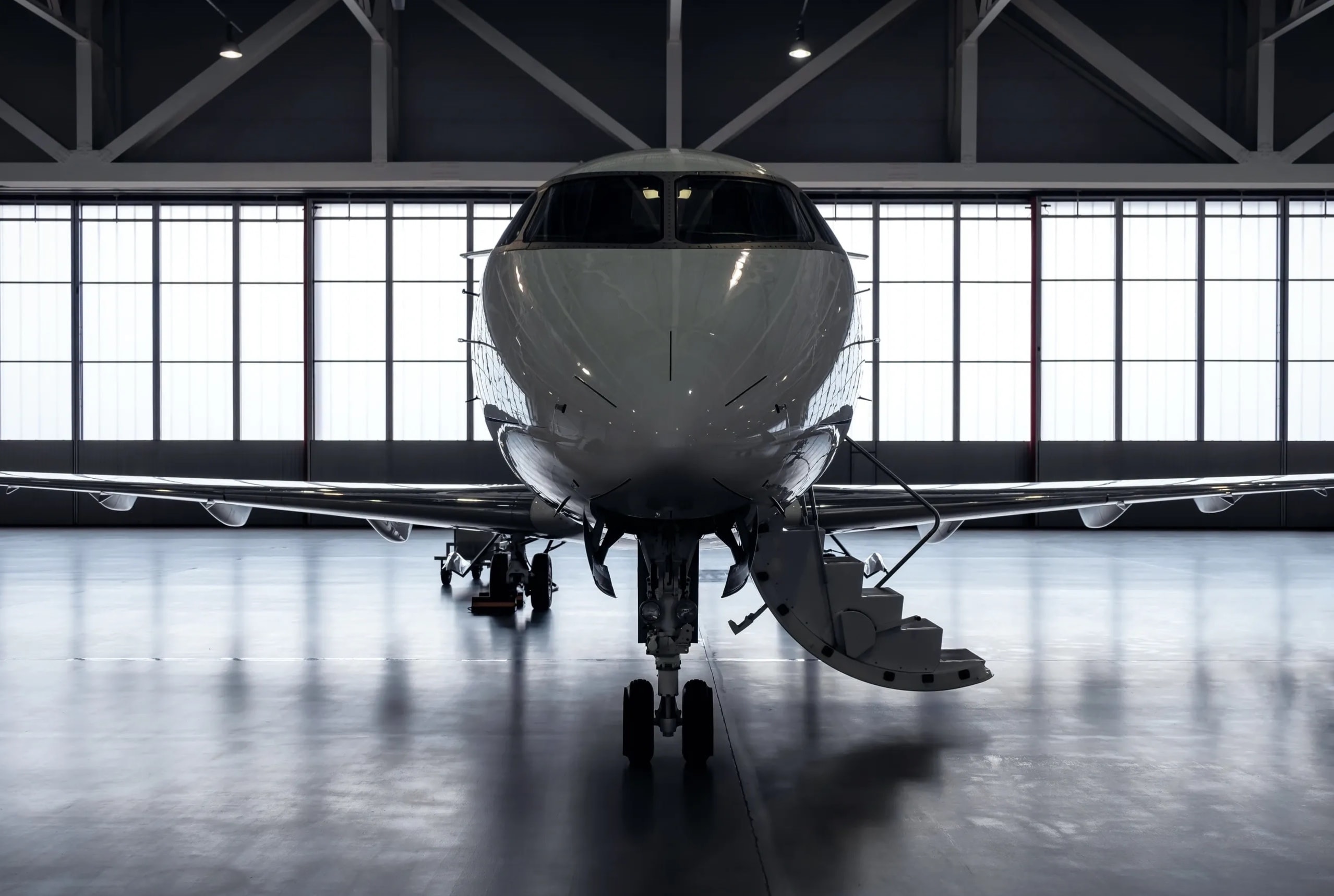
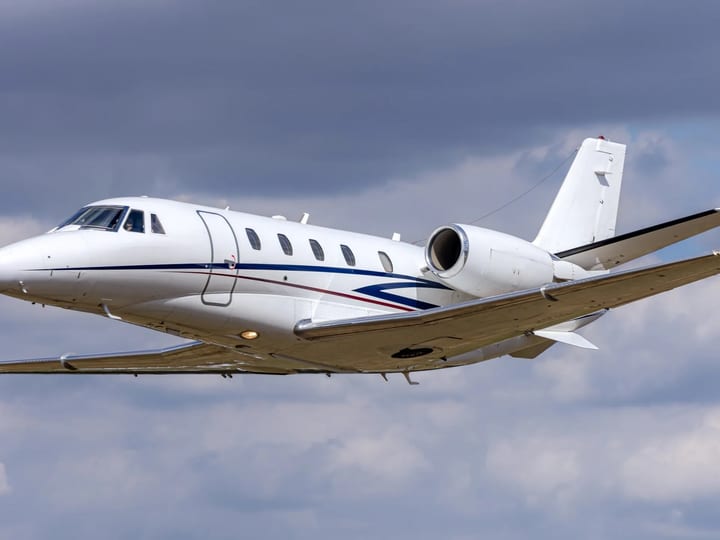
The Bombardier Challenger 3500 and Embraer Praetor 600 are two of the most capable super-midsize jets currently in production. Both aircraft target buyers who need transatlantic range in a mid-cabin platform, and both entered or were significantly updated in the 2021–2022 timeframe. They are frequently evaluated against each other by buyers in the super-midsize segment.
This comparison examines their published specifications, cabin environments, range capabilities, and acquisition considerations. Buyers should verify specifications for any specific aircraft they are evaluating, as individual aircraft may differ from published figures depending on configuration and production year.
The principal decision
The Challenger 3500 and Praetor 600 are closely matched in range and cabin size, but differ in cabin width, speed, and design philosophy. The Challenger 3500 has a wider cabin cross-section; the Praetor 600 has a longer range and higher cruise speed. Buyers who prioritize cabin width and a proven Bombardier platform tend to favor the Challenger 3500; buyers who prioritize range and speed tend to favor the Praetor 600.
Side-by-side specifications
The figures below are drawn from Bombardier and Embraer published performance data for current production configurations. Published range figures assume NBAA IFR reserves at long-range cruise speed with a defined passenger count. Actual range on a specific flight depends on payload, weather, routing, winds, and airport conditions.
| Specification | Challenger 3500 | Praetor 600 |
|---|---|---|
| Manufacturer | Bombardier | Embraer |
| Entry into service | 2022 | 2019 |
| Engines | Honeywell HTF7350 | Honeywell HTF7500E |
| Published range (NBAA IFR reserves) | Approx. 3,400 nm | Approx. 4,018 nm |
| Maximum cruise speed | Mach 0.82 | Mach 0.83 |
| Maximum operating altitude | 45,000 ft | 45,000 ft |
| Cabin length (excl. baggage) | Approx. 24 ft 0 in | Approx. 27 ft 0 in |
| Cabin width | Approx. 7 ft 2 in | Approx. 6 ft 11 in |
| Cabin height | Approx. 6 ft 1 in | Approx. 6 ft 0 in |
| Typical passenger seating | Up to 10 (typically 8–9) | Up to 12 (typically 8–10) |
| Baggage volume (internal) | Approx. 106 cu ft | Approx. 114 cu ft |
| MTOW | Approx. 43,100 lb | Approx. 44,092 lb |
| Takeoff distance (MTOW, ISA, sea level) | Approx. 4,855 ft | Approx. 4,084 ft |
Sources: Bombardier Challenger 3500 specifications (bombardier.com); Embraer Praetor 600 specifications (embraer.com). Specifications are for current production aircraft and may differ for earlier production examples or specific configurations. Reviewed November 2026.
Cabin environment and comfort
The Challenger 3500's cabin is wider than the Praetor 600's — approximately 7 ft 2 in versus 6 ft 11 in. While the difference is modest, it is meaningful in a super-midsize context: the Challenger 3500's additional width provides a slightly more spacious feel in the cabin cross-section. Buyers who regularly carry four or more passengers in a face-to-face configuration may find the Challenger 3500's cabin more comfortable.
The Praetor 600's cabin is approximately 3 feet longer than the Challenger 3500's, which allows for more seating positions or a more spacious layout in a narrower cross-section. Both aircraft feature a flat floor throughout the cabin. The Challenger 3500 features Bombardier's updated cabin management system and Nuage seating as standard; the Praetor 600 features Embraer's Bossa Nova interior design.
Range and mission suitability
The Praetor 600's published range of approximately 4,018 nm is approximately 600 nm greater than the Challenger 3500's 3,400 nm. That difference is significant for buyers who need transatlantic capability. The Praetor 600 can fly nonstop from New York to London (approximately 3,450 nm) under most conditions; the Challenger 3500's range is close to this distance and may require favorable winds or a reduced payload on some transatlantic routes.
For buyers whose missions are primarily domestic or regional — routes of 1,500–2,500 nm — both aircraft offer more than sufficient range, and the range difference is less relevant to the purchase decision.
Airport and runway performance
The Praetor 600's published sea-level takeoff distance at MTOW is approximately 4,084 ft — shorter than the Challenger 3500's approximately 4,855 ft. This difference may be relevant for buyers who regularly operate from shorter runways. Both aircraft can access most general aviation airports with runways of 5,000 ft or more.
Acquisition and ownership considerations
Both aircraft are in current production and benefit from their manufacturers' global service networks. The Challenger 3500 entered service in 2022 as an update to the Challenger 350; the Praetor 600 entered service in 2019. Pre-owned examples of both are available, with the Praetor 600 having a slightly longer production history and correspondingly more pre-owned inventory.
Buyers should verify engine program enrollment, airframe inspection status, and avionics currency as part of the acquisition due diligence process for either aircraft.
A pre-purchase inspection is an essential step in any super-midsize aircraft acquisition. Bencasso coordinates independent technical evaluations to help buyers understand the condition of a specific aircraft before committing.
Pre-Purchase Inspection GuideWhen the Challenger 3500 may be the better fit
- Buyers who prioritize cabin width and a wider cross-section for face-to-face seating
- Missions primarily within North America or the North Atlantic corridor with favorable winds
- Buyers who prefer the Bombardier platform and service network
- Operators who value the Challenger 3500's updated Nuage seating and cabin management system
When the Praetor 600 may be the better fit
- Buyers who need reliable transatlantic range with a full passenger load
- Missions requiring shorter runway performance
- Buyers who value a longer cabin for more seating positions
- Operators who prefer the Embraer platform and service network
Conclusion
The Challenger 3500 and Praetor 600 are both excellent super-midsize jets, and the choice between them depends primarily on whether the buyer prioritizes cabin width (Challenger 3500) or range and runway performance (Praetor 600). Buyers should evaluate both aircraft against their specific routes, passenger requirements, and operational priorities before making a decision.
Bencasso Air Group provides independent buyer representation for super-midsize aircraft acquisitions, from mission analysis and aircraft sourcing through due diligence, negotiation, and closing.
Aircraft Acquisition ServicesFrequently asked questions
Is the Challenger 3500 a new aircraft or an update?
The Challenger 3500 is an update to the Challenger 350, which entered service in 2014. The Challenger 3500 entered service in 2022 and features updated avionics, Bombardier's Nuage seating, an updated cabin management system, and revised exterior styling. The airframe and engines are closely related to the Challenger 350. Buyers evaluating pre-owned Challenger 350 examples should note that the 3500's cabin updates are not retrofittable to the 350.
Can the Challenger 3500 fly nonstop from New York to London?
The Challenger 3500's published range of approximately 3,400 nm is close to the New York–London distance of approximately 3,450 nm. Whether a specific flight can be completed nonstop depends on payload, winds, routing, and other operational factors. With favorable winds and a reduced payload, nonstop transatlantic operations may be possible; buyers who regularly need this capability should evaluate the Praetor 600's greater range or request aircraft-specific performance analysis.
What engines does the Praetor 600 use?
The Praetor 600 uses Honeywell HTF7500E engines, which are an uprated variant of the HTF7000 family. These engines provide more thrust than the HTF7350 engines used in the Challenger 3500, contributing to the Praetor 600's greater range and shorter takeoff distance.
How does the Challenger 3500 compare to the Challenger 350?
The Challenger 3500 is an evolution of the Challenger 350, featuring updated avionics (Bombardier Vision Flight Deck), Nuage seating, an updated cabin management system, and revised exterior styling. The airframe, engines, and overall performance are closely related. Buyers who are familiar with the Challenger 350 platform will find the 3500 a natural progression.
Which aircraft has better short-field performance?
The Praetor 600 has a shorter published sea-level takeoff distance at MTOW (approximately 4,084 ft) compared to the Challenger 3500 (approximately 4,855 ft). This difference may be relevant for buyers who regularly operate from shorter runways. Both aircraft can access most general aviation airports with runways of 5,000 ft or more.