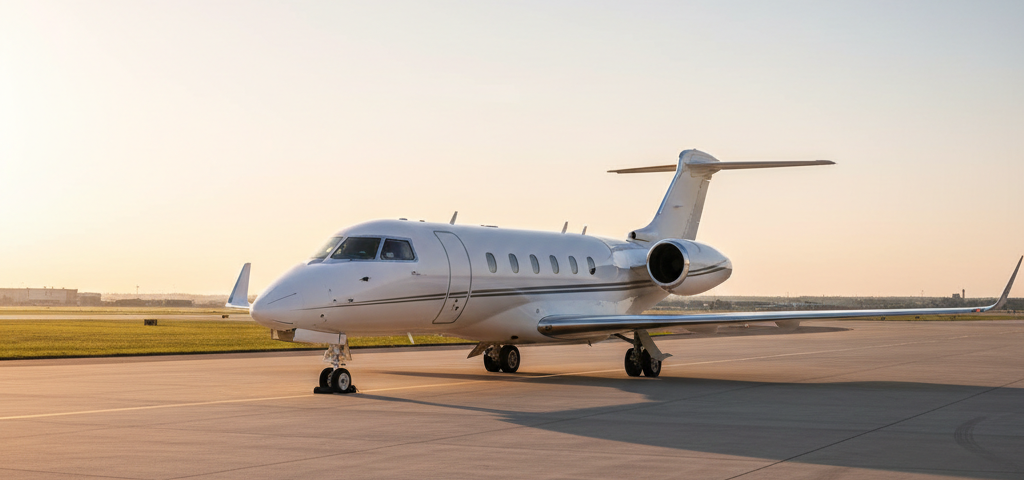
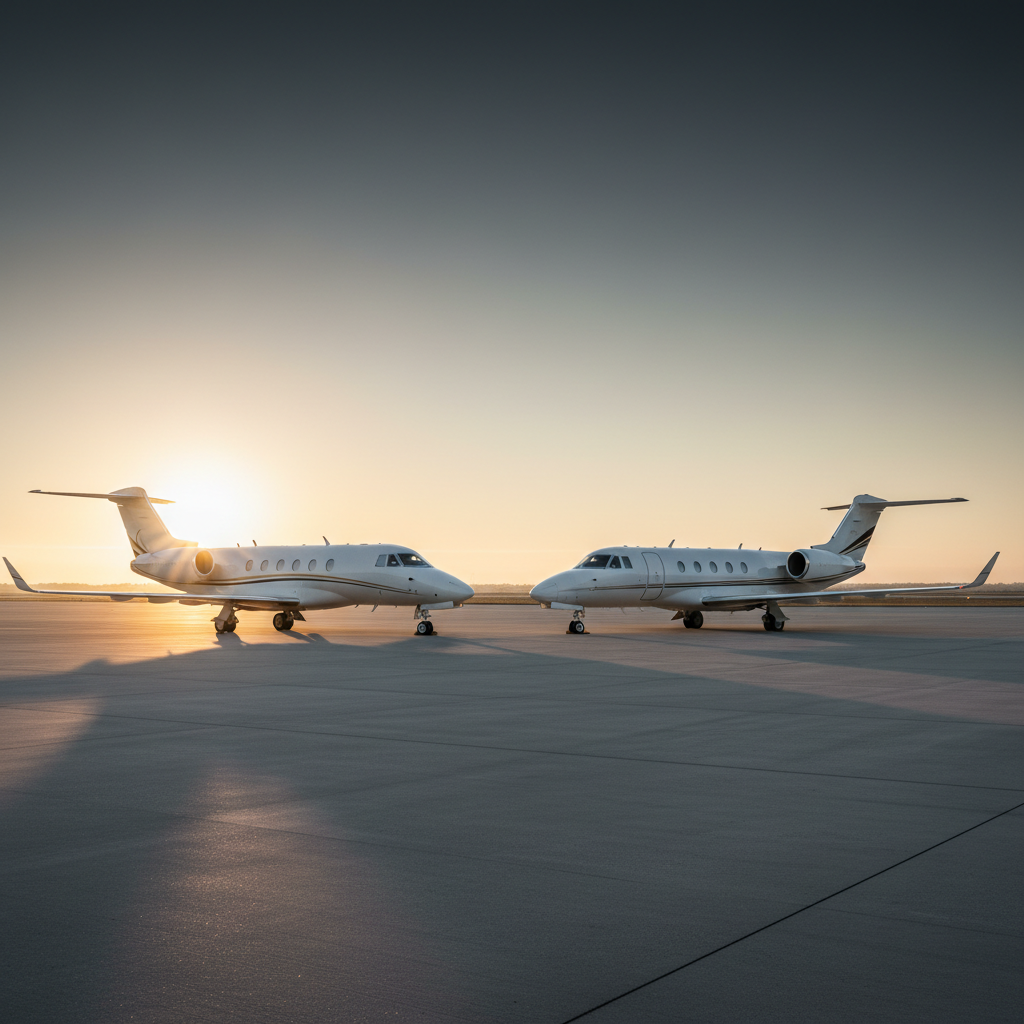
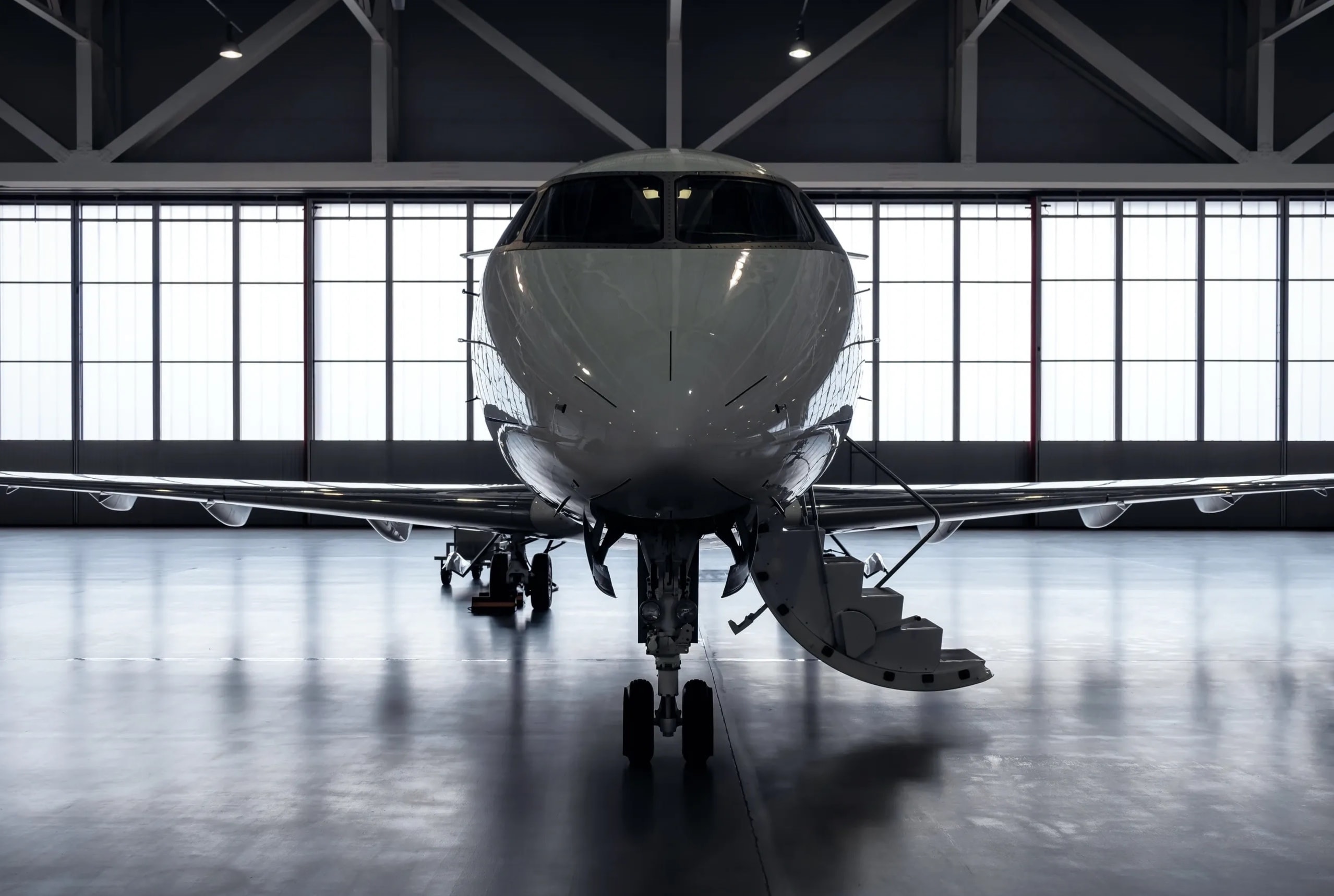
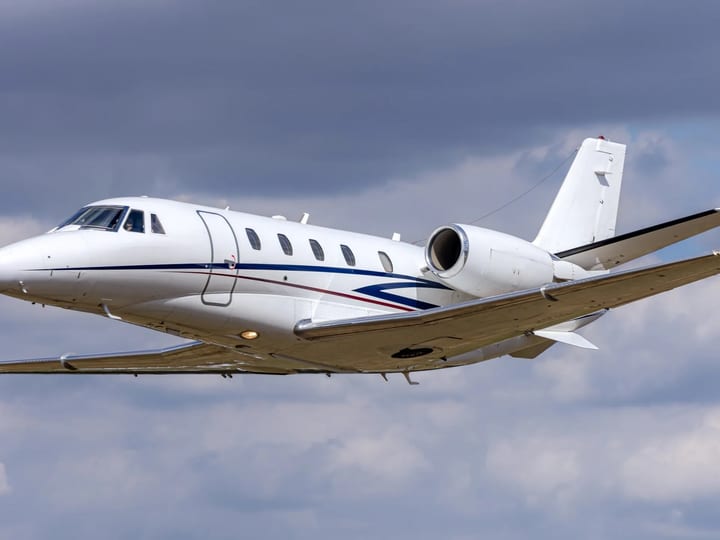
The Cessna Citation Latitude and Citation Longitude are midsize jets from Textron Aviation that share a common fuselage cross-section but differ in range, engines, cabin length, and operating capability. The Latitude entered service in 2015 and established itself as one of the best-selling midsize jets in the market; the Longitude entered service in 2019 as a longer-range, higher-capability evolution of the same platform.
Both aircraft are in current production and benefit from Textron Aviation's global service network. Buyers evaluating either aircraft are typically choosing between a proven, widely-supported platform (Latitude) and a newer aircraft with greater range and a longer cabin (Longitude).
The principal decision
The Citation Latitude is well-suited for buyers whose missions are primarily domestic or regional — routes of up to approximately 2,700 nm — and who value a proven platform with a large pre-owned inventory. The Citation Longitude is better suited for buyers who need greater range, a longer cabin, or higher cruise speed, and who are willing to pay a higher acquisition price for those capabilities.
Side-by-side specifications
The figures below are drawn from Textron Aviation published performance data for current production configurations. Published range figures assume NBAA IFR reserves at long-range cruise speed with a defined passenger count. Actual range on a specific flight depends on payload, weather, routing, winds, and airport conditions.
| Specification | Citation Latitude | Citation Longitude |
|---|---|---|
| Manufacturer | Textron Aviation (Cessna) | Textron Aviation (Cessna) |
| Entry into service | 2015 | 2019 |
| Engines | Pratt & Whitney Canada PW306D1 | Honeywell HTF7700L |
| Published range (NBAA IFR reserves) | Approx. 2,700 nm | Approx. 3,500 nm |
| Maximum cruise speed | Mach 0.77 | Mach 0.84 |
| Maximum operating altitude | 45,000 ft | 45,000 ft |
| Cabin length (excl. baggage) | Approx. 21 ft 2 in | Approx. 25 ft 2 in |
| Cabin width | Approx. 5 ft 6 in | Approx. 5 ft 6 in |
| Cabin height | Approx. 6 ft 0 in | Approx. 6 ft 0 in |
| Typical passenger seating | Up to 9 (typically 7–8) | Up to 12 (typically 8–10) |
| Baggage volume (internal) | Approx. 66 cu ft | Approx. 100 cu ft |
| MTOW | Approx. 30,300 lb | Approx. 39,500 lb |
| Takeoff distance (MTOW, ISA, sea level) | Approx. 3,580 ft | Approx. 4,072 ft |
Sources: Textron Aviation Citation Latitude and Citation Longitude specifications (txtav.com). Specifications are for current production aircraft and may differ for earlier production examples or specific configurations. Reviewed November 2026.
Cabin environment and comfort
The Latitude and Longitude share the same fuselage cross-section — approximately 5 ft 6 in wide and 6 ft 0 in tall — which means the cabin width and height are identical. The Longitude's cabin is approximately 4 feet longer, which allows for additional seating positions or a more spacious layout. Both aircraft feature a flat floor and stand-up cabin, which is notable for the midsize category.
The Longitude's longer cabin and higher MTOW allow it to carry more passengers or more baggage on longer routes. The Latitude's shorter cabin is sufficient for most domestic missions with 6–8 passengers. Both aircraft feature Textron Aviation's cabin management system and are available with a range of interior configurations.
Range and mission suitability
The Longitude's published range of approximately 3,500 nm is approximately 800 nm greater than the Latitude's 2,700 nm. The Longitude can fly nonstop from New York to London (approximately 3,450 nm) under favorable conditions; the Latitude cannot complete this route nonstop. For buyers who need transatlantic capability, the Longitude is the appropriate choice between the two.
The Longitude also cruises faster — Mach 0.84 versus the Latitude's Mach 0.77. On a 2,000 nm route, that speed difference translates to approximately 30–40 minutes of additional flight time in the Latitude. On shorter routes, the difference is less significant.
Runway performance
The Latitude has a shorter published sea-level takeoff distance at MTOW (approximately 3,580 ft) compared to the Longitude (approximately 4,072 ft). This difference may be relevant for buyers who regularly operate from shorter runways. The Latitude's shorter field performance is one of its frequently cited advantages for operators who serve smaller regional airports.
Acquisition and ownership considerations
The Citation Latitude has been in production since 2015 and has a large pre-owned inventory, with many examples available across a range of ages and configurations. The Citation Longitude entered service in 2019 and has a smaller pre-owned inventory, though it is growing as early production examples become available.
Both aircraft benefit from Textron Aviation's ProParts and PowerAdvantage maintenance programs and a global service network. Buyers should verify engine program enrollment, airframe inspection status, and avionics currency as part of the acquisition due diligence process.
A pre-purchase inspection is an essential step in any midsize aircraft acquisition. Bencasso coordinates independent technical evaluations to help buyers understand the condition of a specific aircraft before committing.
Pre-Purchase Inspection GuideWhen the Citation Latitude may be the better fit
- Buyers whose missions are primarily domestic or regional (routes up to 2,700 nm)
- Operators who value shorter runway performance and access to smaller airports
- Buyers who prefer a proven platform with a large pre-owned inventory
- Operators who want a lower acquisition cost relative to the Longitude
When the Citation Longitude may be the better fit
- Buyers who need transatlantic range or routes of 2,700–3,500 nm
- Passengers who value a longer cabin with more seating positions
- Buyers who want higher cruise speed to reduce block time on longer routes
- Operators who need more baggage capacity for longer missions
Conclusion
The Citation Latitude and Longitude are both capable midsize jets from the same platform family, and the choice between them is primarily a question of range and cabin length requirements. The Latitude is a proven, widely-supported aircraft well-suited for domestic and regional missions. The Longitude offers greater range, a longer cabin, and higher cruise speed for buyers who need those capabilities. Buyers should evaluate both aircraft against their specific routes and operational requirements before making a decision.
Bencasso Air Group provides independent buyer representation for midsize aircraft acquisitions, from mission analysis and aircraft sourcing through due diligence, negotiation, and closing.
Aircraft Acquisition ServicesFrequently asked questions
Is the Citation Longitude a new aircraft or an update to the Latitude?
The Citation Longitude is a distinct aircraft that shares the Latitude's fuselage cross-section but has a longer fuselage, different engines (Honeywell HTF7700L versus Pratt & Whitney PW306D1), greater range, and higher cruise speed. It is not an update or modification of the Latitude — it is a separate model that entered service in 2019.
Can the Citation Latitude fly nonstop from New York to London?
No. The Citation Latitude's published range of approximately 2,700 nm is not sufficient for a nonstop New York–London routing (approximately 3,450 nm). Buyers who need transatlantic capability should evaluate the Citation Longitude (approximately 3,500 nm range) or a super-midsize or larger aircraft.
What is the cabin altitude on the Citation Latitude and Longitude?
Both the Citation Latitude and Longitude maintain a cabin altitude of approximately 6,000 ft at their maximum operating altitude of 45,000 ft. This is comparable to other midsize jets in the category. Buyers who are sensitive to cabin altitude should compare this figure to other aircraft they are evaluating.
How many passengers can the Citation Longitude carry?
The Citation Longitude is certified for up to 12 passengers, though typical configurations seat 8–10 in a comfortable layout. The actual passenger count on a specific flight depends on the interior configuration, baggage requirements, and range. Buyers should review the specific interior configuration of any aircraft they are evaluating.
Is the Citation Latitude a good first private jet?
The Citation Latitude is widely regarded as one of the most capable and cost-effective midsize jets available, and it is a popular choice for first-time private jet buyers who need a stand-up cabin and domestic range. Its large pre-owned inventory means buyers have many options at a range of price points. Buyers should evaluate their specific mission requirements and obtain a detailed operating cost analysis before making a purchase decision.