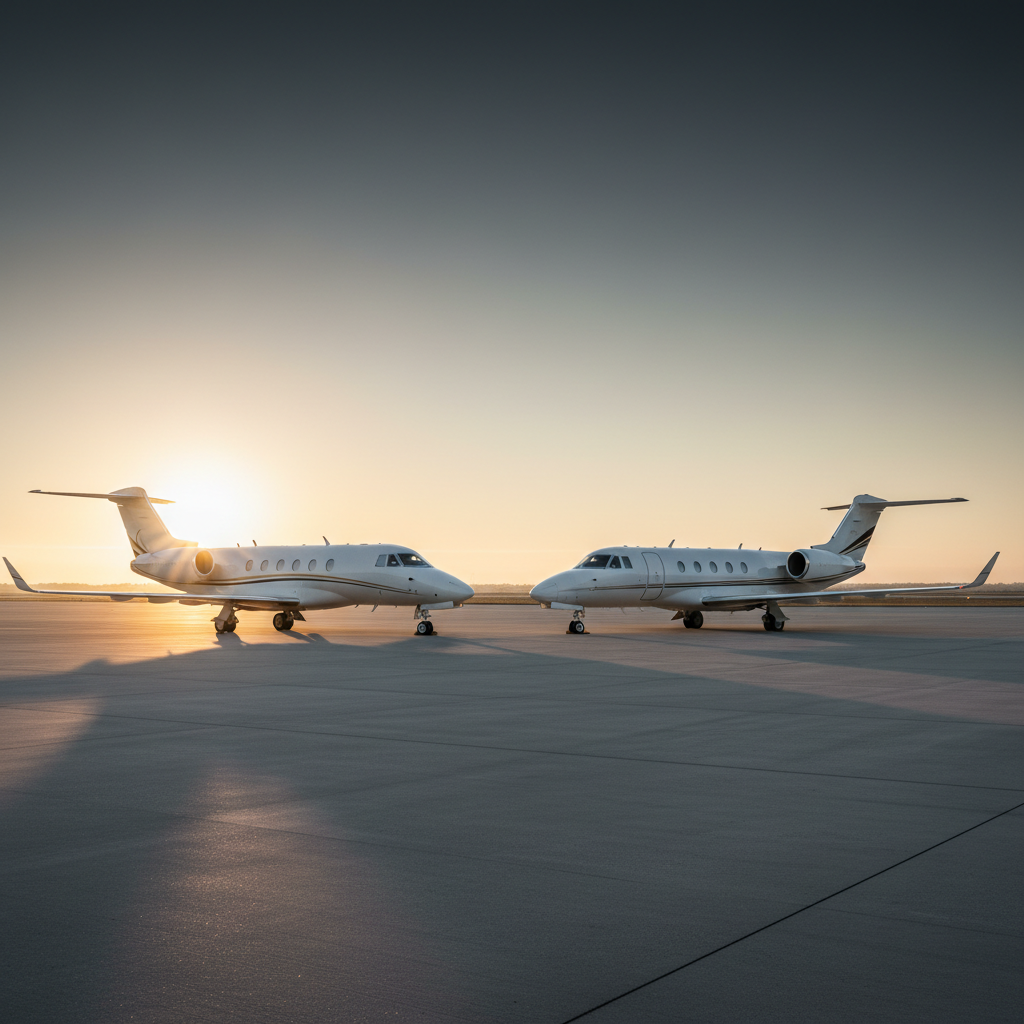
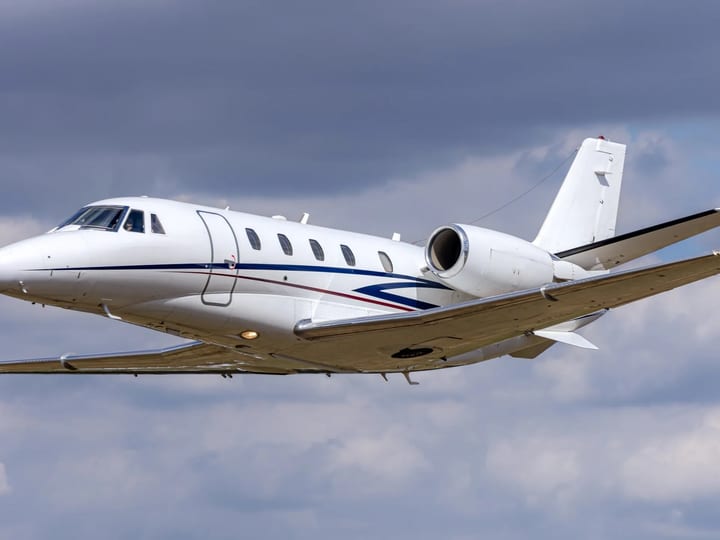
The Bombardier Global 6000 and Global 6500 are large-cabin ultra-long-range jets that share a common fuselage cross-section but differ in engines, range, avionics, and production era. The Global 6000 is a mature platform with a long production history and a well-established service network; it has been succeeded by the Global 6500 as the current production model in this range category. The Global 6500 is a newer aircraft that entered service in 2019, featuring updated Rolls-Royce Pearl 15 engines, a redesigned cabin, and Bombardier’s Vision Flight Deck.
Buyers evaluating either aircraft are typically choosing between a proven, well-supported platform with a larger pre-owned inventory and a newer aircraft with updated technology and greater range. The decision often comes down to the buyer's range requirements, preference for newer avionics, and acquisition budget.
The principal decision
Buyers who prioritize a proven platform, a larger pre-owned inventory, and lower acquisition cost tend to favor the Global 6000. Buyers who need the Global 6500's greater range, updated engines, or newer avionics architecture tend to favor the Global 6500. Both aircraft offer a comparable cabin environment — the same fuselage cross-section and similar interior configurations — but the Global 6500's updated technology and range advantage are meaningful for buyers who regularly fly ultra-long-range routes.
Side-by-side specifications
The figures below are drawn from Bombardier published performance data. The Global 6000 figures reflect the production aircraft as delivered; the Global 6500 figures reflect current production specifications. Published range figures assume NBAA IFR reserves at long-range cruise speed with a defined passenger count. Actual range on a specific flight depends on payload, weather, routing, winds, and airport conditions.
| Specification | Global 6000 | Global 6500 |
|---|---|---|
| Manufacturer | Bombardier | Bombardier |
| Model status | Pre-owned model; succeeded by the Global 6500 | Current production model |
| Engines | Rolls-Royce BR710A2-20 | Rolls-Royce Pearl 15 |
| Published range (NBAA IFR reserves) | Approx. 6,000 nm | Approx. 6,600 nm |
| Maximum cruise speed | Mach 0.89 | Mach 0.90 |
| Maximum operating altitude | 51,000 ft | 51,000 ft |
| Cabin length (excl. baggage) | Approx. 48 ft 4 in | Approx. 48 ft 4 in |
| Cabin width | Approx. 8 ft 2 in | Approx. 8 ft 2 in |
| Cabin height | Approx. 6 ft 3 in | Approx. 6 ft 3 in |
| Typical passenger seating | Up to 17 (typically 12–14) | Up to 17 (typically 12–14) |
| Baggage volume (internal) | Approx. 195 cu ft | Approx. 195 cu ft |
| MTOW | Approx. 99,500 lb | Approx. 99,500 lb |
| Takeoff distance (MTOW, ISA, sea level) | Approx. 6,000 ft | Approx. 5,900 ft |
Sources: Bombardier Global 6000 and Global 6500 product specifications (bombardier.com). Specifications are for production aircraft as delivered and may differ for specific configurations or production years. Reviewed November 2026.
Cabin environment and comfort
The Global 6000 and Global 6500 share the same fuselage cross-section — approximately 8 ft 2 in wide and 6 ft 3 in tall — which is one of the widest in the large-cabin category. The cabin length is also identical at approximately 48 ft 4 in. The principal cabin difference between the two aircraft is the interior design: the Global 6500 features Bombardier's Nuage seating (a redesigned seat with a unique recline mechanism) and updated cabin management technology as standard. Global 6000 interiors vary by production year and customer specification.
Both aircraft typically feature three cabin zones — a forward lounge, a mid-cabin conference or dining area, and an aft stateroom — though configurations vary. The wide cabin allows for true club seating with meaningful aisle width, and the aft stateroom on most configurations includes a full-size bed. Both aircraft are well-suited for overnight flights on ultra-long-range routes.
Engine differences and implications
The Global 6000 uses Rolls-Royce BR710A2-20 engines, which are a mature and well-supported powerplant with a long service history. The Global 6500 uses the newer Rolls-Royce Pearl 15 engines, which offer improved fuel efficiency, greater thrust, and a higher bypass ratio compared to the BR710. The Pearl 15 engines contribute to the Global 6500's greater range and slightly higher cruise speed.
Buyers evaluating a pre-owned Global 6000 should assess the engine program enrollment and status carefully, as the BR710 engines have a longer service history and may have more accumulated cycles. The Pearl 15 engines on the Global 6500 are newer and have less accumulated time, but buyers should still verify program enrollment and maintenance status.
Range, payload, and mission suitability
The Global 6500's published range of approximately 6,600 nm is approximately 600 nm greater than the Global 6000's 6,000 nm. Both aircraft are capable of most ultra-long-range routes, including New York to Dubai (approximately 6,850 nm, which may require a stop depending on conditions and payload), Los Angeles to London (approximately 5,450 nm), and New York to Tokyo (approximately 6,750 nm, which may require a stop). The Global 6500's additional range extends the nonstop envelope on the most demanding routes.
Both aircraft cruise at Mach 0.89–0.90, which is among the fastest in the ultra-long-range category. The speed difference between the two aircraft is minimal and is unlikely to be a deciding factor for most buyers.
Avionics and flight deck
The Global 6500 features Bombardier's Vision Flight Deck, which includes a new avionics suite with enhanced navigation, communication, and surveillance capabilities. The Global 6000's avionics vary by production year; earlier examples may have older avionics that require updates to meet current airspace requirements. Buyers evaluating a pre-owned Global 6000 should assess the avionics currency and any required upgrades as part of the acquisition due diligence process.
Acquisition and ownership considerations
The Global 6000 has a longer production history and a larger pre-owned inventory than the Global 6500. Buyers seeking a pre-owned ultra-long-range Bombardier will generally find more Global 6000 examples available, with a wider range of ages, configurations, and price points. The Global 6500's newer platform means fewer pre-owned examples, but also that available aircraft tend to be younger with more current avionics.
Both aircraft benefit from Bombardier's Smart Services maintenance programs and a global service network. Buyers should verify engine program enrollment, airframe inspection status, avionics currency, and interior condition as part of the acquisition due diligence process.
Operating costs for both aircraft are in the ultra-long-range category — among the highest in business aviation. Buyers should obtain a detailed operating cost analysis for their specific mission profile, including fixed annual expenses and variable costs per flight hour, before making a purchase decision.
A pre-purchase inspection is an essential step in any ultra-long-range aircraft acquisition. Bencasso coordinates independent technical evaluations to help buyers understand the condition of a specific aircraft before committing.
Pre-Purchase Inspection GuideIllustrative buyer scenarios
Scenario A — Established operator: A buyer who is familiar with the Global platform, values a proven maintenance network, and is comfortable with the Global 6000's avionics may find a well-maintained pre-owned Global 6000 more attractive than a newer Global 6500 at a higher price. The Global 6000's larger inventory also provides more acquisition options.
Scenario B — Technology-focused operator: A buyer who values the latest avionics, updated cabin technology, and the Global 6500's greater range may prefer the newer platform despite its higher acquisition cost and more limited pre-owned inventory. The Pearl 15 engines' improved efficiency may also reduce operating costs over time.
Conclusion
The Global 6000 and Global 6500 are both capable ultra-long-range jets with a common fuselage and similar cabin environments. The Global 6000 offers a proven platform, a larger pre-owned inventory, and a lower acquisition cost. The Global 6500 offers updated engines, newer avionics, greater range, and a more modern cabin design. Buyers should evaluate both aircraft against their specific routes, operational requirements, and acquisition objectives before making a decision.
Bencasso Air Group provides independent buyer representation for ultra-long-range aircraft acquisitions, from mission analysis and aircraft sourcing through due diligence, negotiation, and closing.
Aircraft Acquisition ServicesFrequently asked questions
Is the Global 6000 still in production?
The Global 6000 is no longer in current production; Bombardier has transitioned to the Global 6500 as its successor in this range category. Bombardier continues to support the Global 6000 through its service network. Buyers seeking a new aircraft should evaluate the Global 6500 or other current-production Bombardier models.
What is the difference between the Global 6000 and the Global Express XRS?
The Global 6000 is the successor to the Global Express XRS, which was produced from 2006 through 2012. The Global 6000 features updated avionics, a redesigned interior, and improved performance compared to the Global Express XRS. Buyers evaluating older Global Express XRS examples should assess avionics currency and any required upgrades carefully, as the platform is older and may require more significant investment to bring current.
How does the Global 6500 compare to the Global 7500?
The Global 7500 is Bombardier's flagship ultra-long-range jet, with a published range of approximately 7,700 nm and a longer, four-zone cabin. It entered service in 2018 and commands a significantly higher acquisition price than the Global 6500. Buyers who need the Global 7500's additional range or larger cabin should evaluate it separately; for most ultra-long-range missions, the Global 6500 is a capable and more cost-effective option.
What should I look for in a pre-owned Global 6000?
Key due diligence items include engine program enrollment and status for the BR710 engines, airframe inspection history and upcoming major inspection requirements, avionics currency and any required upgrades for current airspace requirements, interior condition and any desired refurbishment, and the aircraft's maintenance records and logbooks. A pre-purchase inspection by an independent maintenance facility is an essential step in evaluating any specific aircraft.
Can the Global 6000 or 6500 fly nonstop from New York to Tokyo?
New York to Tokyo is approximately 6,750 nm. The Global 6500's published range of approximately 6,600 nm is close to this distance, but whether a specific flight can be completed nonstop depends on payload, winds, routing, and other operational factors. The Global 6000's 6,000 nm range would typically require a technical stop on this route. Buyers should request aircraft-specific performance analysis for their most demanding routes rather than relying on published range figures alone.