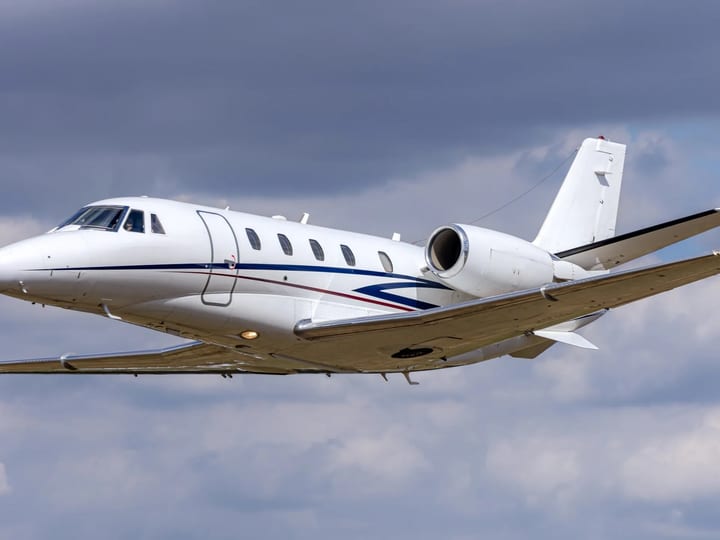
The United States holds the largest inventory of pre-owned business jets in the world. For international buyers, sourcing from U.S. inventory can offer access to a wider selection of aircraft, competitive pricing, and a well-established transaction framework — including title search, escrow, and FAA registry records.
Buying a private jet from the United States as an international buyer involves additional steps compared to a domestic transaction. These include export documentation, import requirements in the destination country, aircraft registration in the new jurisdiction, and coordination of professionals in more than one country. None of these steps are insurmountable, but they require planning and qualified guidance.
Why international buyers source aircraft from the United States
The U.S. pre-owned market is large, liquid, and well-documented. FAA aircraft registry records are publicly accessible, and a significant portion of the global business jet fleet is registered in the United States. This means that buyers in Europe, the Middle East, Latin America, and Asia-Pacific can often find more candidates at a given price point than in their home markets.
U.S.-registered aircraft also benefit from a mature title and escrow infrastructure. Aviation title companies and escrow agents with experience in cross-border transactions are well-established in the United States, which provides a structured framework for international buyers to complete a transaction with defined protections.
Currency and pricing dynamics can also be a factor. Depending on exchange rates and market conditions, U.S.-priced aircraft may represent favorable value for buyers transacting in other currencies. This is a market variable, not a guarantee, and buyers should evaluate it at the time of their search.
The role of a U.S.-based acquisition advisor
An international buyer working with a U.S.-based acquisition advisor gains a representative who can access the full U.S. market — including publicly listed aircraft and off-market opportunities — and who understands the transaction framework from the U.S. side.
The advisor's role includes defining the mission and aircraft requirements, identifying and screening candidates, coordinating a pre-purchase inspection, supporting negotiation, and managing the closing process. For an international buyer, the advisor also helps identify and coordinate the additional professionals a cross-border transaction requires — including legal counsel, tax advisors, and import specialists in the buyer's jurisdiction.
A U.S.-based advisor does not replace the professionals the buyer needs in their own country. Legal, tax, and import requirements in the destination country require qualified local professionals. The advisor's role is to manage the U.S. side of the transaction and coordinate the overall process.
Key steps in a cross-border aircraft acquisition from the United States
The acquisition process for an international buyer follows the same general structure as a domestic transaction, with additional steps at the closing and delivery stage.
| Phase | Key activities | Cross-border consideration |
|---|---|---|
| Mission definition | Define routes, passengers, range, cabin requirements, budget | Consider operating country requirements and registration jurisdiction |
| Market search | Identify U.S.-registered candidates; screen against requirements | Confirm export eligibility and any model-specific restrictions |
| Pre-purchase inspection | Coordinate inspection at appropriate facility | Inspection may occur in the U.S. or at a facility accessible to both parties |
| Purchase agreement | Negotiate terms, contingencies, delivery conditions | Address export, import, and registration conditions in the agreement |
| Title and escrow | Title search, lien release, escrow arrangement | U.S. aviation title companies handle FAA deregistration and export certificate |
| Export and import | FAA export airworthiness certificate; import clearance in destination country | Requires coordination with aviation authority in destination country |
| Registration | Register aircraft in destination country | Requirements vary by country; legal counsel in destination country required |
Export documentation and FAA deregistration
When a U.S.-registered aircraft is sold to an international buyer, the aircraft must be deregistered from the FAA registry and an export airworthiness certificate must be obtained. The export certificate confirms that the aircraft meets the airworthiness standards of the United States at the time of export.
The export process is coordinated through the FAA and typically involves an aviation maintenance professional who can certify the aircraft's condition. The buyer's acquisition advisor and the title company work together to ensure that deregistration and the export certificate are completed as part of the closing process.
The export certificate does not automatically satisfy the import requirements of the destination country. Each country has its own aviation authority and its own process for accepting an imported aircraft onto its registry. The buyer should engage qualified aviation legal counsel in the destination country early in the process.
What to include in your inquiry to a U.S.-based advisor
To begin a productive conversation with a U.S.-based acquisition advisor, an international buyer should be prepared to provide the following information.
- Your location and the country where the aircraft will be registered and operated
- Your mission profile: typical routes, passenger count, range requirements
- The aircraft category or specific models you are considering
- Your budget range
- Your timeline for acquisition
- Any specific requirements related to operating in your country or region
This information allows the advisor to assess whether the engagement is feasible, identify relevant candidates, and explain the process and its requirements before any commitment is made.
Disclaimer
This article is for general informational purposes only and is not legal, tax, regulatory, customs, airworthiness, or financial advice. Export, import, and registration requirements vary by country, aircraft type, and transaction structure. Buyers should obtain qualified legal, tax, and aviation counsel in all relevant jurisdictions before proceeding with an international aircraft transaction.